
In the lush area of Sea Point in Cape Town, which hugs the length of the Atlantic Ocean, there's more than meets the eye. While looking picture perfect from the outside, soaring property prices mean the area is inaccessible to most working-class locals, and instead only geared for tourism. One long-time resident, Sheila Madikane, has lived and worked in Sea Point since 1987.
A domestic worker and housing activist, she is one of the leaders of Reclaim the City (RTC), a social movement fighting for affordable housing, and a member of hmed Kathrada House (AKH) occupation, formerly Helen Bowden Nurses Home, in Green Point.
Under apartheid, Madikane recalls moving in with her aunt on St. Johns Road, but due to the restrictions in the apartment, she left the room early each morning to avoid being seen, and bathed using public taps. She eventually found work as a domestic worker and lived at the Mimosa apartments.
When their "maid's quarters" were shut down, she struggled to find accommodation for herself, her three daughters, and her grandchild. That's when they moved into the housing occupation. She is now one of the most important voices in the struggle for affordable accommodation.
Madikane became an activist when she realized others faced the same struggles she did. Cape Town's housing crisis has deepened alongside widening inequality. The segregation entrenched by apartheid-era policies like the Group Areas Act of the 1950s pushed poor and working-class families to the city's margins. Today, the inner city remains a space largely reserved for wealthy South Africans and foreign tourists who can afford its soaring property prices. But the citizens are not going down without a fight.
Over the past decade, housing occupations led by civil society movements have surged, demanding access to well-located, affordable housing. The reality is stark. Housing demand in the Western Cape far exceeds supply. Some applicants have waited 30 years on government databases. As of September 2024, the backlog surpassed 400,000. In a country where 10 percent of the population controls 90 percent of the wealth, these occupations represent more than resistance. They are a fight for equity, dignity, and a more equal country.
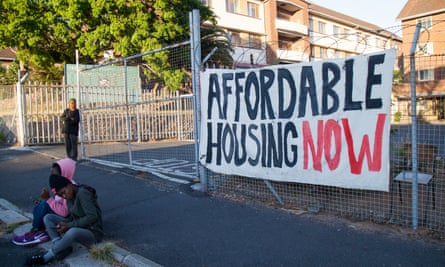
Women mothers, grandmothers, caregivers:are often at the forefront of this fight, taking matters into their own hands. They have fought for inclusivity and transformation, and the visibility of these movements has grown significantly, with wins achieved at the High Court and Constitutional Court.
The Government-owned building (Ahmed Kathrada House) is now home to Reclaim the City (RTC), whose rallying cry is "Land for People, Not for Profit." RTC began as a campaign against apartheid spatial planning, gentrification, and the inner city's housing scarcity, issues still urgent three decades into democracy.
Their struggle began in March 2017, when domestic workers, petrol attendants, carers, nurses, and teachers occupied the provincially owned building. Their action was sparked by then Western Cape Premier Helen Zille's decision to sell the Tafelberg site in Sea Point, which activists had earmarked for social housing. Instead of engaging, the provincial government tried to make conditions unlivable for the occupants by cutting off their electricity.
Madikane, now a key RTC figure, wrote in an open letter to Zille, "I have told you what the Tafelberg site represents to me, and other domestic workers and carers in Sea Point: for us, it is a symbol of hope, a way to desegregate our city; to recognize the struggles of working-class people; to live and work in the inner city. But we have not been heard."
The fight for Tafelberg has been ongoing with housing activists who had a major win at the Constitutional Court last year when the sale of the building was overturned. In May 2025, the Western Cape provincial government revealed its housing plans, which, after years of activists fighting, include plans for affordable and social housing in sections of the building.
Kindly,Subscribe with your Valid Email Address and receive Relevant Notifications to your active Device with Professionalism.
Thankyou for the Scheduled Quality Ample Time.
